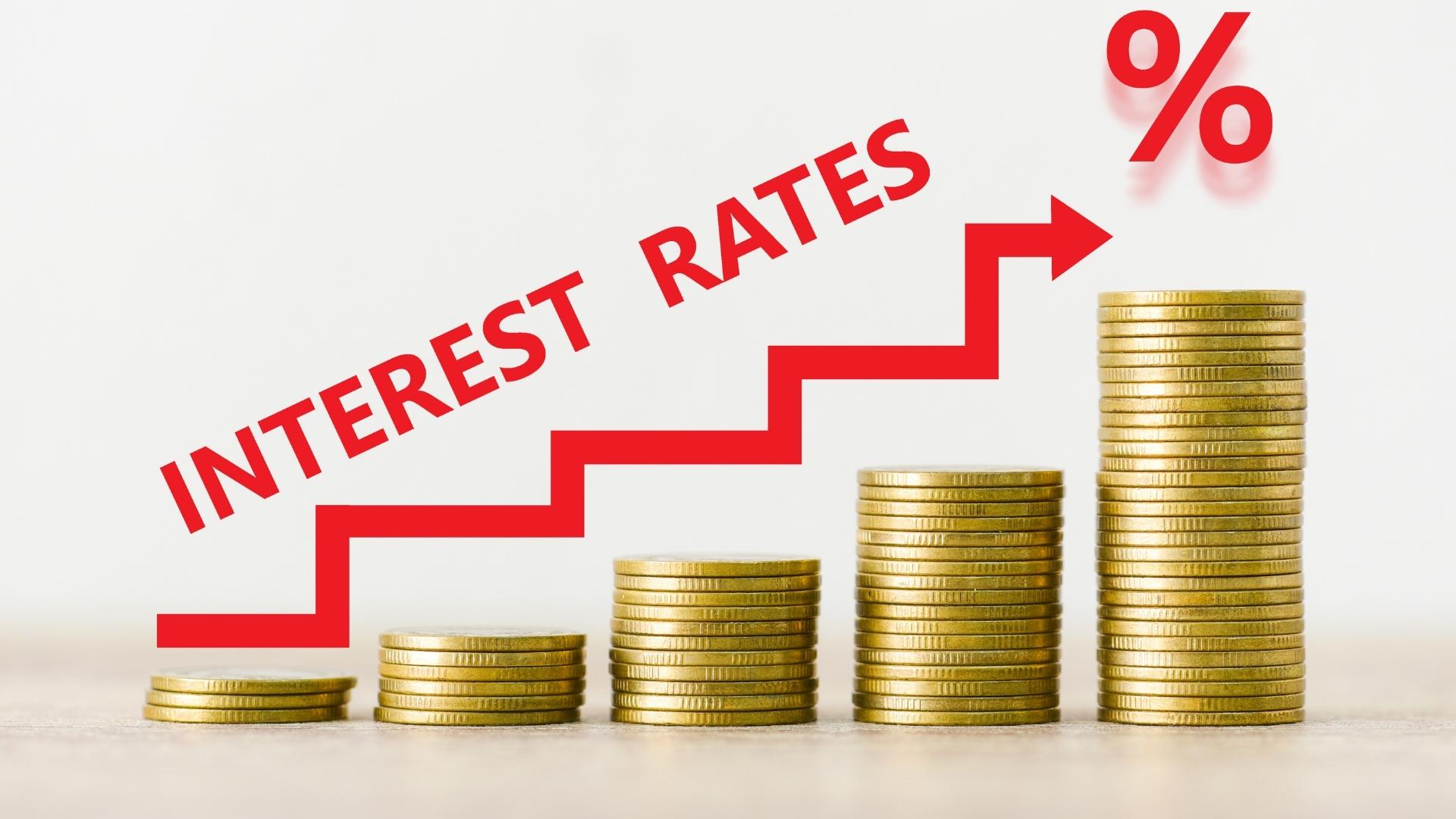
Mortgage rates have returned to the 7% range, putting interest rates squarely back into the homebuying conversation.
According to Freddie Mac’s Primary Mortgage Market Survey, the average 30-year fixed mortgage rate was 7.03% as of September 24, 2026. That compares with 6.95% one week earlier and 6.76% two weeks earlier.
The increase followed the Federal Reserve’s September meeting, when policymakers raised the target range for the federal funds rate by a quarter percentage point to 3.75%–4.00%.
For prospective homebuyers, that naturally raises an important question: Are mortgage rates likely to keep rising?
The answer is more complicated than any single forecast or headline suggests. Mortgage rates could move in either direction as new economic information arrives. Understanding what actually influences them can help buyers make better decisions without trying to perfectly time the market.
The Federal Reserve Does Not Directly Set Mortgage Rates
One of the biggest misconceptions about mortgage rates is that the Federal Reserve sets them.
It does not.
The Fed establishes a target range for the federal funds rate, which is a short-term interest rate used in overnight lending between financial institutions. Changes to that rate can influence borrowing costs throughout the economy, but a 30-year mortgage is a long-term financial product.
Mortgage rates are influenced by a broader combination of factors, including Treasury yields, inflation expectations, economic growth, labor-market conditions, investor demand for mortgage-backed securities and expectations about future monetary policy.
That is why mortgage rates do not necessarily rise or fall by the same amount—or even in the same direction—as a Fed rate change.
Why Inflation Remains Important
Inflation is one of the most important variables for anyone watching mortgage rates.
When investors believe inflation may remain elevated, they generally require greater returns on longer-term investments to compensate for the declining purchasing power of future dollars. That can put upward pressure on bond yields and mortgage rates.
The Federal Reserve specifically cited elevated inflation when announcing its September rate increase.
If inflation continues to prove persistent, financial markets may anticipate tighter monetary conditions for longer. If inflation shows convincing signs of easing, the outlook can change.
For homebuyers, this means inflation reports may sometimes have a greater immediate effect on mortgage pricing than a widely anticipated Fed announcement.
Treasury Yields Can Offer Important Clues
Mortgage rates frequently move in the same general direction as longer-term Treasury yields, particularly the 10-year Treasury yield, although the relationship is not one-to-one.
When Treasury yields rise, mortgage rates often face upward pressure. When yields decline, mortgage rates may have room to move lower.
But mortgage pricing also includes additional factors related to mortgage-backed securities, lender capacity, risk and market demand.
The important takeaway is that mortgage rates reflect expectations about where the economy is going—not simply what happened at the latest Federal Reserve meeting.
Employment and Economic Growth Matter Too
A strong economy can be good news for households while simultaneously creating upward pressure on interest rates.
Strong employment, resilient consumer spending and healthy economic growth can reinforce expectations that inflation will remain elevated or that the Federal Reserve will need to maintain restrictive policy.
Conversely, a significant slowdown in economic activity can create downward pressure on longer-term yields and mortgage rates.
This is one reason mortgage rates can change quickly when employment reports, inflation data or other major economic releases differ from expectations.
Could Mortgage Rates Decline Before the End of 2026?
They could. They could also remain elevated or rise further.
Economic forecasts can be useful for understanding possible scenarios, but they should not be confused with guarantees. Even professional forecasts change as inflation, employment, economic growth and financial-market conditions evolve.
Fannie Mae, for example, publishes monthly housing and economic forecasts while explicitly noting that forecasts depend on assumptions and are subject to change.
Rather than planning a home purchase around one projected future mortgage rate, buyers may be better served by evaluating whether a purchase works financially under the terms actually available today.
The Risk of Waiting for the “Perfect” Mortgage Rate
Waiting for rates to decline can sound straightforward: wait for a lower rate, obtain a lower payment and save money.
The housing market rarely changes one variable at a time.
If mortgage rates decline significantly, more buyers could return to the market. Increased demand could create additional competition for desirable homes and potentially reduce negotiating leverage.
Home prices can also change while a buyer waits.
On the other hand, buying solely because someone predicts rates will rise is not a sound strategy either. A mortgage payment needs to fit comfortably within the buyer’s overall financial plan.
The better question is not simply, “Where will rates go?”
It is, “Does buying make sense for me at today’s price, payment and financing terms?”
Your Actual Mortgage Rate May Differ From the Headlines
National mortgage-rate averages provide a useful snapshot of the market, but they are not personalized loan quotes.
The mortgage rate available to an individual borrower can depend on factors including credit profile, down payment, loan-to-value ratio, property type, occupancy, loan program, loan amount, discount points and the length of the rate-lock period.
Two borrowers purchasing similarly priced homes can therefore receive different financing options on the same day.
That makes an individualized mortgage review much more useful than simply following a national rate headline.
Focus on Payment, Not Just Rate
Interest rate matters, but it is only one part of the homeownership equation.
Buyers should evaluate the complete estimated housing payment, including principal and interest, property taxes, homeowners insurance, mortgage insurance when applicable, and HOA dues when applicable.
They should also consider cash required at closing and the financial reserves they want to maintain after the purchase.
A slightly lower rate does not automatically make a home affordable, just as a higher rate does not automatically make a purchase inappropriate.
The numbers need to work together.
What Homebuyers Can Do Right Now
If you are considering purchasing before the end of 2026, preparation can be more productive than trying to predict the next rate move.
Review your credit, determine a comfortable monthly housing budget, understand how different down-payment amounts affect your financing, and compare appropriate loan programs.
You can also ask your mortgage professional to model several scenarios. Seeing how your estimated payment changes at different purchase prices, down payments and interest rates can help you establish clear boundaries before you begin making offers.
In some transactions, seller credits or other allowable financing strategies may also help reduce eligible closing costs or address the cost of financing.
A Better Strategy Than Predicting Rates
No one knows with certainty where mortgage rates will be several weeks or months from now.
What buyers can control is their preparation.
A well-prepared buyer understands the payment they can comfortably afford, the cash they want to invest, the loan programs available to them and the financing options that may make sense for their particular situation.
At Ensure Lending, we help borrowers look beyond the rate headline and evaluate the complete financing picture. If you are considering buying, refinancing or simply want to understand what today’s market means for your purchasing power, a personalized mortgage review can give you numbers based on your actual goals and financial profile.
Mortgage rates, loan programs and eligibility requirements are subject to change. This information is for educational purposes and is not a commitment to lend or a guarantee of any particular interest rate or loan terms.